Kombucha & Alcohol: How It Forms and How to Keep It Low
Science Corner | Beginner → Intermediate
TL;DR: Alcohol is a natural byproduct of kombucha fermentation — your yeast produces it, your bacteria convert most of it into acids. Typical home brews land between 0.5–3% ABV. To minimize it: ferment cool (68–75°F), reduce sugar slightly, use a strong starter ratio, and refrigerate promptly after F2. You can't get to zero, but you can get close.
Kombucha is often called a non-alcoholic drink. And for most well-managed home brews, that's close enough to true. But alcohol is a natural byproduct of fermentation — it's always there, at some level. Depending on how you brew, your kombucha can end up with more than you'd expect, and more than you intended.
Understanding where it comes from is the first step to keeping it in check.
Why Does Kombucha Contain Alcohol?
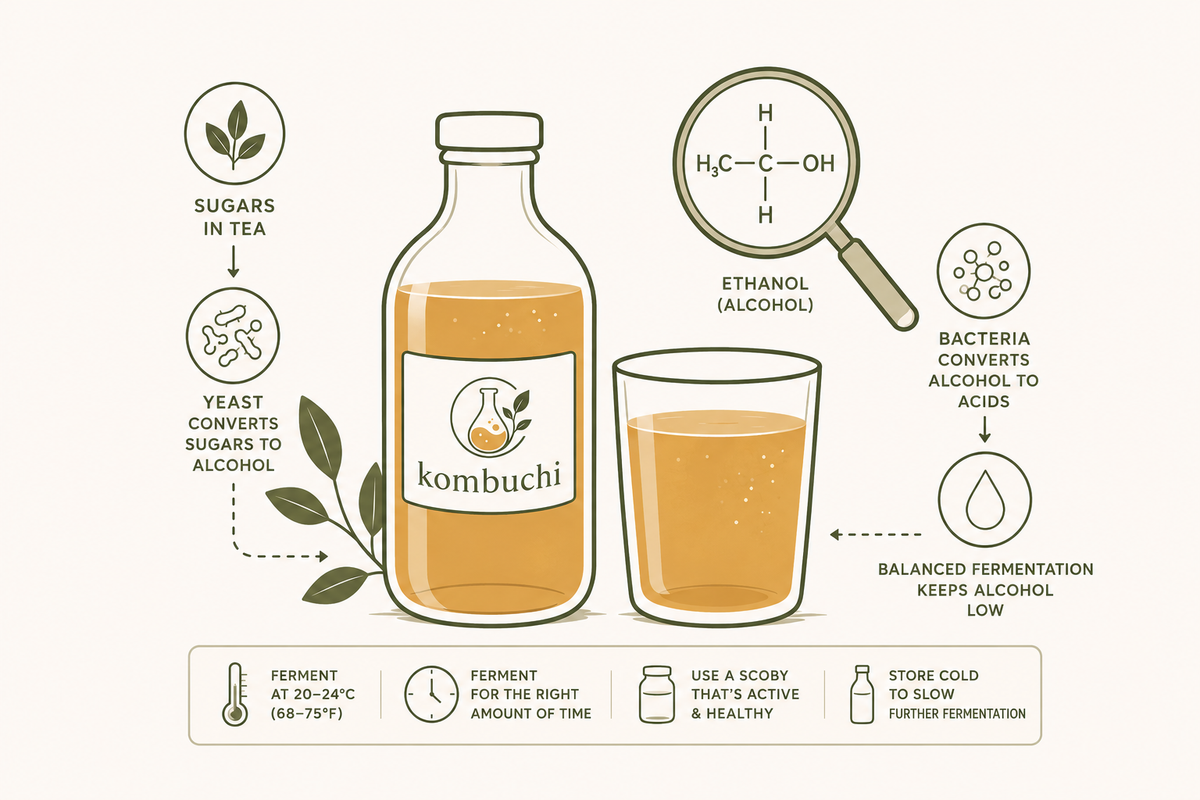
Your SCOBY is a living community of bacteria and yeast working together. The yeast converts sugars into alcohol and CO₂. The bacteria then convert much of that alcohol into acids — mainly acetic acid and gluconic acid — which is what gives kombucha its signature tang.
The key word is much. The bacteria don't convert all of it. What remains is the residual alcohol in your finished brew.
Typical alcohol levels:
| Type | ABV Range |
|---|---|
| Home-brewed kombucha | 0.5% – 3% |
| Commercial "non-alcoholic" kombucha | < 0.5% (legal threshold in most countries) |
| Hard kombucha | 4% – 8% (intentionally boosted) |
What Drives Alcohol Higher?
Yeast strain activity
Wild SCOBYs vary widely. Some contain more aggressive yeast strains that produce alcohol faster than the bacteria can convert it.
Sugar content
More sugar means more food for yeast, which means more alcohol produced. High-sugar recipes naturally create more opportunity for alcohol buildup.
Fermentation temperature
Warmer temperatures (above 80°F / 27°C) accelerate yeast activity disproportionately compared to bacteria, tipping the balance toward alcohol production.
Anaerobic conditions
Yeast thrives without oxygen; bacteria generally need some. A fully sealed vessel during F1 favors alcohol production.
Second fermentation (F2)
Bottling with added sugar for carbonation creates a sealed, anaerobic environment — ideal for yeast. F2 can significantly boost alcohol content, especially if it runs long or warm.
How to Minimize Alcohol Content
Ferment cool
Aim for 68–75°F (20–24°C). This slows yeast activity relative to bacteria and keeps the conversion of alcohol into acids more efficient. Avoid placing your brew near heat sources or in direct sun.
Use a little less sugar
Standard recipes call for 1 cup of sugar per gallon. Try reducing to ¾ cup — you'll still get good fermentation, but with a lower starting substrate for the yeast.
Ferment aerobically in F1
Keep your first ferment covered with a breathable cloth, not an airtight lid. Oxygen access favors bacterial activity and helps convert alcohol into acids more efficiently.
Use a stronger starter ratio
Adding more starter liquid creates a more acidic environment from the start, which inhibits yeast somewhat and favors bacterial dominance. Try a 20–25% starter ratio instead of the typical 10%.
Minimize added sugar in F2
If you do a second ferment for carbonation, use the minimum amount of fruit juice or sugar needed. A good starting point is 1–2 teaspoons per 16 oz bottle.
Refrigerate promptly after F2
Once you've reached your desired carbonation level — typically 2–4 days — move bottles straight to the fridge. Cold temperatures dramatically slow yeast activity and stop alcohol from climbing further.
Thin your SCOBY periodically
Over time, thick SCOBYs can accumulate high yeast populations. Peeling off darker, yeast-heavy layers periodically helps rebalance the microbial community in your favor.
How to Measure Alcohol at Home
| Method | Accuracy | Notes |
|---|---|---|
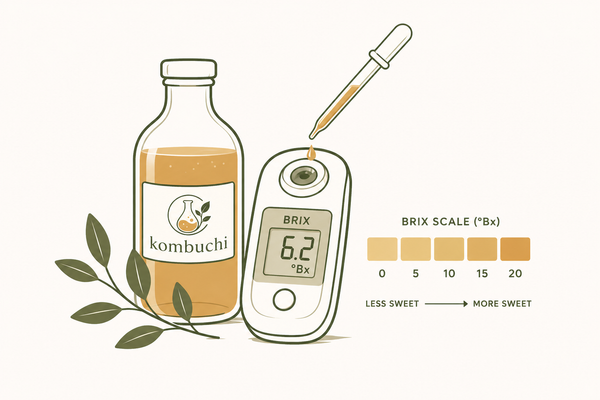
| Refractometer (OG + FG) | Moderate | Estimates sugar consumed, which approximates ABV. Acid content affects readings — useful for trends, not precision. |
| Hydrometer | Better | Takes OG and FG readings, uses standard formula to estimate ABV. More reliable than a refractometer for finished ferments. |
| Test strips | Poor | Not recommended for low-ABV beverages — margin of error is too high. |
| Lab testing | High | Services like White Labs can test precisely for ~$20–30. Worth it if you're sharing or selling. |
Troubleshooting
My brew always tastes quite boozy: Your fermentation environment is likely too warm, your F2 is running too long, or your SCOBY is yeast-heavy. Check temperature first — everything above 80°F starts pushing alcohol up significantly. If temperature is fine, shorten your F2 and refrigerate earlier.
I reduced sugar but fermentation stalled: A small sugar reduction (1 cup → ¾ cup) shouldn't stall fermentation. If it did, your starter liquid ratio may be too low or your SCOBY is weak. Try increasing starter to 20% and checking that your temperature is in the 70–78°F range.
Can I get my kombucha to 0% ABV? Not through home brewing. Your fermentation process will always produce some alcohol. If you need certified sub-0.5% for medical, religious, or pregnancy reasons, commercial kombucha with tested ABV labeling is the safer option.
Key Takeaways
| Topic | The Short Answer |
|---|---|
| Why is there alcohol at all? | Yeast produces it; bacteria convert most of it into acids. The rest stays in your brew. |
| Typical ABV range | 0.5–3% for home brews. Below 0.5% is possible with careful technique. |
| Biggest lever to pull | Temperature. Keep it between 68–75°F. |
| Other key controls | Starter ratio (20–25%), less sugar in F2, refrigerate promptly. |
| Can you hit 0%? | No. For guaranteed sub-0.5%, use commercial tested kombucha. |
| Best way to measure | Hydrometer for home use; lab testing for precision. |
What Comes Next
Alcohol and CO₂ are both products of yeast activity — which means they're closely linked to what's happening in your F2. Understanding carbonation is the next piece of the puzzle. We cover the mechanics, the timing, and how to avoid bottle geysers in: Carbonation 101: Getting the Fizz Right in F2.
If you want to go deeper on the microbial balance between bacteria and yeast, the Kombuchi Fermentation Curve shows how pH and Brix move together over a 14-day ferment — and what that tells you about who's winning.
Questions about your brew's alcohol levels? Drop them in the comments.
Kombuchi — Science Corner